
The Slapper was a neat project done by me and my friend Domonkos Kezsei. Domonkos and I made this project to settle a long time problem posed by a card game we played- Egyptian War. In Egyptian War, a player has to slap cards to claim them before other players do. The person with the most card would win. The dispute was that the slaps would be extremely contested, so arguments would ensue over who would claim the cards. Since we played with 8 or more people, our hands would be scratched and batters from everyone slapping as hard and fast as they could on the cards. In addition, if a player was farther away from the cards, he or she would have a disadvantage. This caused fighting among ourselves for the prime spot in front of the cards.
To fix this problem, Domonkos and I created an electronic “Slapper” which would take care of this problem. What it did was, that when a player pressed a button, the screen on our device would tell the user whether or not they won or lost the slap. The (in most cases) one player who would have the win screen would win the slap, and so take the cards. Since the device would communicate wirelessly, distance wasn’t a problem. And since none of our hands had to make contact, none of our hands got brutally murdered from all of the slapping.
The Process
The Slapper didn’t come easy. An everlasting cycle of debugging, testing, and trying again was essentially how the Slapper was born. When we came up with the idea, Domonkos and I were excited to get it working. So we began.
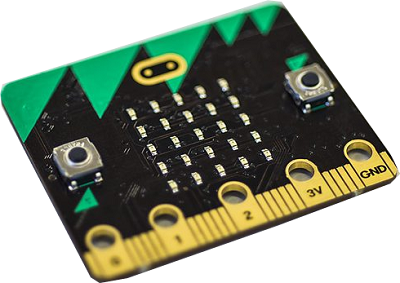
We used the micro:bit hardware and software to create our project. It was a simple to use but versatile platform which was ideal for our purposes.
First, and always first, is the brainstorming. We took out the papers and pencil, and got to work. Initially we were thinking of a very complex architecture, involving stages of execution, joining a room, a host device, and so on. We did try to pursue this path, however, we ran into a whole plethora of obstacles which we simply were not prepared for.
The next stage of development was the perseverance. What was first a rush of initial determination turned to a seemingly desperate, futile attempt to think of a new solution. Domonkos decided that we should push on with the old idea, and kept going with it. And I helped him too, because I didn’t see anything else we could do.
We had come up with everything, from A to Z. We had gone back to the drawing board too many times, and we were on the brink of abandoning the project.
The Final Solution
Both of us were working on our final solution, the one solution that we thought up of that may work. And it failed again…
And when we were trying to fix this final solution, some sort of magic must have happened.
We took out some code here and tweaked some code there, and we tried it and it half-worked! After some quick fixing of this initial code, we managed to get a barely working prototype.
This was great news for us, because we had invested considerable time (5+ hours) into this project, and finally getting it to work was a big eureka moment for us. More improvements were made and then we actually got to use it!
Both of us were reflecting on the progress and making of this project recently. We spent so much time thinking through our solution, but the beauty of it all is that it was that it worked on accident!

